
Duct Pressure Testing
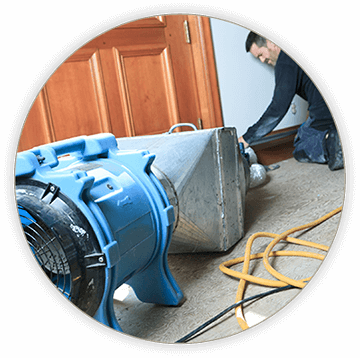
Duct Pressure Testing
Did you know that leaking supply ductwork causes expensive conditioned air to be wasted and dumped into your attic, crawlspace or garage instead of into your house?
Leaks ducts in forced air systems are now recognized as a major source of energy waste in both existing and new houses. Studies indicate that duct systems leakage can account for as much as 25% of total house energy loss, and in many cases has a greater impact on energy use than air infiltration through the building shell.
By now most counties and cities in our area have adopted the International Energy Conservation Code, IECC and the requirement to conduct Duct Pressure Test to new ductwork constructed outside the insulation envelope of your house.
A duct pressure test connects a calibrated fan to your ducts, holds them at a fixed pressure, and measures how much air escapes. The result, reported as CFM25, turns a suspicion about leaky ducts into a number you can check against code and against a retest after sealing. Shemtov Systems runs duct leakage tests for houses in Silver Spring, Wheaton, Rockville, and Olney. To book one, call 240-355-3333.
Key takeaways
- The test holds the sealed ducts at 25 Pascals and reports leakage in cubic feet per minute.
- Total leakage counts every hole; leakage to outdoors counts only what escapes the building envelope.
- Montgomery County permits under the 2021 energy code, which caps a finished system at 4.0 CFM25 per 100 square feet of floor area.
- The tester signs a written report for the code official, so the result joins the permit record.
What does a duct pressure test measure?
Registers and return grilles are sealed, a calibrated fan is connected at the return or the air handler, and it holds a difference of 0.1 inches of water column, 25 Pascals, across the duct system. The airflow needed to hold that pressure is the leakage, reported as CFM25. Testing follows ANSI/RESNET/ICC 380 or ASTM E1554, so one house compares directly with another and with itself later.
How is a blower door different from a duct tester?
A blower door measures the leakiness of the house shell; a duct tester measures the ducts. The two run together for a leakage-to-outdoors test: the blower door holds the house at duct pressure, so a hole between a duct and the conditioned space around it sees no pressure difference and does not register. What the fan still makes up is air escaping to the attic, crawl space, or garage.
What numbers does the result have to beat?
Maryland adopted the 2021 International Energy Conservation Code in May 2023, and Montgomery County enforces it with amendments. A finished system has to come in at or under 4.0 CFM25 per 100 square feet of conditioned floor area, or 80 CFM25 in a 2,000 square foot house. A rough-in test gets the same 4.0 with the air handler installed and 3.0 without it.
Where do older duct systems usually leak?
Rarely where homeowners expect. The largest single leak is often the air handler cabinet and its connection to the supply plenum; new air handlers carry a factory leakage rating of no more than 2 percent of design airflow, which older cabinets never had to meet. After that come the branch takeoffs on the trunk and the boots where ducts meet floors and ceilings.
What do leaky ducts cost in a Maryland summer?
The return side does the most damage here. A return drawing from a hot attic pulls in air far above room temperature, and one open to a crawl space pulls in damp air the coil was never sized to dry, so run times stretch and the house feels sticky. Leakage also unbalances house pressure: what the supply side pushes out comes back in around windows and doors.
What happens after the test?
The measurement says where to spend the effort, so sealing is not guesswork. Work goes to the largest leaks first: cabinet and plenum connections, then takeoffs, collars, seams, and boots. Surfaces are cleaned before sealant goes on, because it has to hold for decades in an unconditioned space. The system is then retested at the same 25 Pascals, and both numbers go on the report.
Frequently asked questions
Is a duct test required when I replace my furnace or air conditioner?
It depends on whether ductwork is new. The energy code applies to ducts newly installed as part of an alteration, with an exception where existing ducts are only extended; unaltered parts need not comply. Since the county amends the code, your permit scope settles it. New runs fall under duct design and installation.
Can I find duct leaks myself?
You can find the biggest ones by feeling along reachable joints while the blower runs, and by looking for dirt streaks at seams. What is left sits out of reach, and a hand check gives no number to improve on.
Does sealing ducts help with summer humidity?
Often, especially when the return side leaks into a crawl space or attic. Closing those leaks removes a moisture load the coil had been fighting and lets central air conditioning service dehumidify the air it was sized for.
How often should a duct system be retested?
There is no set interval the way there is for a tune-up. A test earns its keep when new ductwork goes in, when a system is sealed and you want the before and after, or when a house changes hands. Otherwise see how often to service your HVAC system.
Talk to Shemtov Systems
To have your ducts pressure tested, sealed, and retested in Silver Spring, Montgomery County, or the Olney area, call Shemtov Systems at 240-355-3333. We test new ductwork for code compliance and diagnose existing systems that are losing air.
Homeowner guides
Straight answers to the questions we hear most from Montgomery County homeowners.